
History
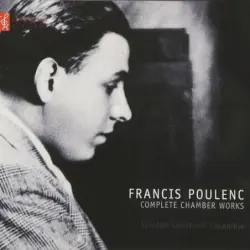
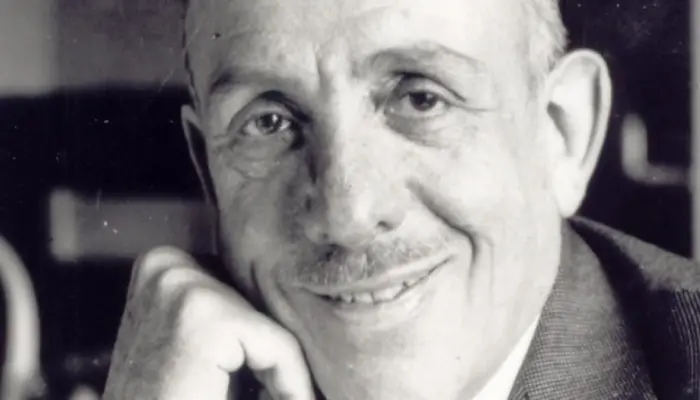
Francis Poulenc (January 7, 1899 – January 30, 1963) was a prominent French composer and a key member of the influential group of composers known as Les Six.
Born and raised in Paris, Poulenc maintained a lifelong affection for the city, preferring its vibrant atmosphere to the countryside. His musical journey began with piano lessons from his mother, an accomplished amateur pianist, embedding music deeply within his family life.
Les Six and Early Influences
As part of Les Six, Poulenc collaborated with fellow young French composers Darius Milhaud, Georges Auric, Louis Durey, Arthur Honegger, and Germaine Tailleferre. This group shared connections with avant-garde figures like Erik Satie and Jean Cocteau. Poulenc's early work often reflected the spirit of the Dada movement, incorporating melodies reminiscent of Parisian music halls. An accomplished pianist himself, he frequently featured the keyboard in his initial compositions. Throughout his career, Poulenc also drew inspiration from his own earlier works, as well as from composers such as Mozart and Camille Saint-Saëns.
A Diverse Output and Later Works
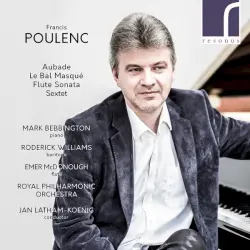
Poulenc composed across a wide spectrum of musical genres, including art song, chamber music, oratorio, opera, ballet, and orchestral works. Among his later significant compositions is a series of pieces for wind instruments and piano. He held a particular fondness for woodwind instruments and had intended to write sonatas for all of them. However, he only completed four: the Flute Sonata (1956), and sonatas for the oboe, clarinet, and horn.
Early Recognition and Artistic Evolution
His early work, Rapsodie nègre (1917), for baritone, piano, string quartet, flute, and clarinet, set nonsensical syllables attributed to a Liberian poet. The piece, dedicated to Erik Satie, reportedly led to a harsh critique from his composition teacher, Paul Vidal, who dismissed it as "inept" and associated Poulenc with the "Igor Stravinsky and Erik Satie gang." Stravinsky, upon hearing of this incident, arranged for the piece to be published.
Later in his life, personal losses and a pilgrimage to Rocamadour prompted a rediscovery of his faith. This spiritual reawakening influenced his compositions, imbuing them with a more somber and austere character, exemplified by his opera, Les Dialogues des Carmelites.
Discography