
History
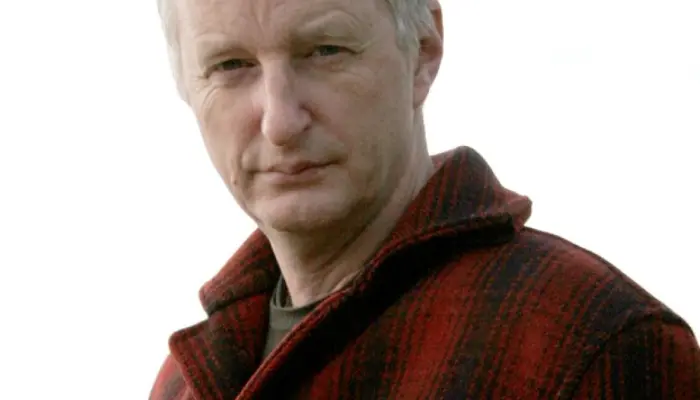
Billy Bragg, born Stephen William Bragg on December 20, 1957, in Barking, Essex, England, is a prominent English singer-songwriter and a committed left-wing activist. His musical style is a distinctive fusion of folk, punk rock, and protest songs, with lyrics that frequently address political and romantic themes.
Early Career and Musical Beginnings
In 1977, Bragg formed the punk rock/pub rock band Riff Raff, performing in London's pubs and clubs. Though the band released several singles, they achieved limited recognition. During this period, he also worked at Guy Norris Records in Barking. Disillusioned with his music career, Bragg briefly joined the British Army in May 1981, serving only three months before buying his discharge for £175. He then returned to performing solo concerts and busking around London, accompanied by his electric guitar. His roadie at the time was Andy Kershaw, who later became a BBC DJ.
Breakthrough and Chart Success
Bragg's initial demo tapes received no interest from the music industry. However, by posing as a television repairman, he gained access to Peter Jenner, an A&R man at Charisma Records. Jenner, impressed by the demo, agreed to release it as a record on Charisma's new imprint, Utility, titled Life's a Riot with Spy Vs. Spy, in July 1983. This release gained further traction when DJ John Peel played a track from it, albeit at the wrong speed.
Following Charisma's acquisition by Virgin Records, Jenner became Bragg's manager. Andy Macdonald, then press officer at Stiff Records and founder of Go! Discs, re-released the album on his label in November 1983. In 1984, Bragg released Brewing Up with Billy Bragg, a collection of political songs and romantic ballads. The following year, the EP Between the Wars, featuring a cover of Leon Rosselson's "The World Turned Upside Down," reached the UK Top 20 and earned him an appearance on Top of the Pops. His song "A New England," with an added verse, became a Top 10 hit for Kirsty MacColl in 1985.
Continued Artistic Development
Bragg's first Top 10 album, Talking with the Taxman about Poetry, was released in 1986. This was followed by Workers Playtime in 1988, which saw Bragg incorporate a backing band and more elaborate arrangements. In 1990, he released the political mini-LP The Internationale, paying tribute to influences like Phil Ochs. The 1991 album Don't Try This at Home included the hit single "Sexuality." Following financial difficulties with his record label, Bragg regained the rights to his back catalogue.
Collaborations and Later Work
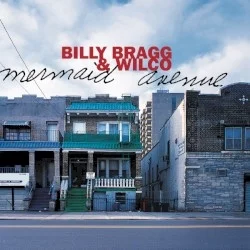
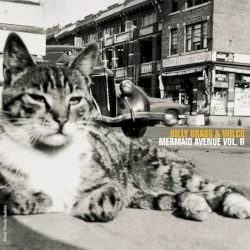
After a hiatus to raise his son, Bragg released William Bloke in 1996. He then collaborated with Nora Guthrie, setting her father Woody Guthrie's unrecorded lyrics to music. This resulted in the acclaimed albums Mermaid Avenue (1998) and Mermaid Avenue Vol. II (2000), created with the band Wilco and Natalie Merchant. Bragg later formed his own band, The Blokes, to promote these albums.
Throughout the 2000s, Bragg continued to explore diverse musical avenues. He performed with ska-punk band Less Than Jake for the Rock Against Bush compilation, teamed up with The Levellers to celebrate Joe Strummer's birthday, and joined the WOMAD-inspired collective The Imagined Village. His album Mr. Love & Justice was released in 2008. He also engaged in acting and theatrical projects, including a role in the film "A13: Road Movie" and the play "Pressure Drop."
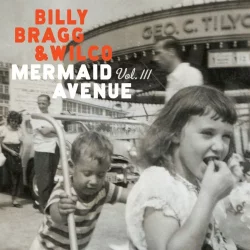
In 2010, Bragg curated the Leftfield stage at Glastonbury Festival. In 2012, he performed Guthrie songs at the Hay Literary Festival, coinciding with the release of Mermaid Avenue Vol. III and Mermaid Avenue: The Complete Sessions. His latest studio album, Tooth And Nail, was released in 2013, showcasing his continued exploration of Americana and alternative country genres. In November 2017, he released the mini-album Bridges Not Walls.
Discography